When the Book Isn’t Working
What makes a great read-aloud, and how to know before you begin
November 1, 2026
Hello friends,
I once abandoned a book I had barely started reading to my grade 6 class. It happened years ago and I’ve forgotten the title and author, but I’ve never forgotten what came next. Learning moments such as this have a lasting effect.
Usually, read-alouds work magic, calm students, engage them, give us something meaty to discuss, and a reason to read on. Not this time. The kids were restless and distracted. I was stumbling, impatient, unable to get a grip on the story.
I had committed the most grievous of errors when I selected the book. I didn’t test the book’s “read-aloud-ability”. I should have read the first chapter aloud to an empty room, marked tricky spots, and told the class why I’d chosen the book. Instead, I jumped in cold and judged the book solely by its colourful cover and the brief description on the back.
After 20 minutes, I closed the book. “Would anyone mind if I stopped reading this book, and we switched to a different one?” I asked the class.
Students were quiet. Surprise registered on almost every face. What? Give up on a book? Abandon it? Why, you barely started.
We discussed the matter, posing pros and cons for continuing. Overall, the students noticed what I had. Based on the first chapter, there was little to hold our attention. The sentences were awkward - too long, too much the same, not the kind of stuff that rolls off the tongue or makes a good real-aloud smooth and riveting. Furthermore, the writing was dry, the characters paper thin, and the plot… Was there any evidence that there even was one?
So, we did the unthinkable. Scrapped the book, switched to another. In so doing, we learned a few things about what made some books better read-alouds than others.
It sounds good in the mouth. The sentences in our failed book were long, awkward, and all built the same way. Reading aloud exposed every clumsy sentence. A good read-aloud has a musical quality to it: short sentences next to long ones, sounds that land, lines that practically read themselves.
“I slip off Prince’s back and drop to the ground, stiff, sore and plumb tuckered out. Prince clomps right up to the lake and sinks his muzzle into its blue depths, sucking up the water and swallowing it in huge gusty gulps. After a bit, he rears his head up and swooshes water around in his mouth, streams of it pouring down his tongue and teeth.”
From Lost on the Prairie by MaryLou Driedger
With that in mind, read this passage aloud, and relish its musical perfection!
Listening level beats reading level. Children can follow richer vocabulary and more complex plots by ear than they can decode on their own. Reading expert Jim Trelease, says reading level doesn’t catch up to listening level until about eighth grade, so a read-aloud can safely stretch past what students would pick up themselves, often adding to their interest in the story, and more opportunities for discussion.
It has a voice. A fictional narrator with a distinct personality gives me something to perform and gives students someone to follow. In a good read-aloud, each character sounds different and has a personality of their own. In the book we dropped, I couldn’t have told you who was speaking.
Something is happening in every chapter. When a novel is read a chapter or two at a time, a strong purpose driving the story helps listeners pick up the action when they come back the next day. If a listener can’t say what the character wants, the book isn’t pulling them forward.
It has a pinch of peril. Adults tend to protect kids from difficult material, such as fear, loss, injustice, or a sad ending. A hard topic works when the book is honest about it, trusts the reader, and doesn’t talk down, over-explain what they should feel, or tidy everything up. Readers aged about 9 to 13 are old enough to meet those things in a story, especially in the safety of a shared classroom with a teacher there to talk about it.
It sparks talk. The best read-alouds leave room for discussion: right and wrong, loyalty, loss, fairness, justice. The right book will have kids arguing about it at recess.
The characters are complex. The people in our abandoned book were paper thin: one note each, with nothing to puzzle over. Complex characters are the opposite. They want two things at once, they surprise us, and they can be brave and frightened in the same scene. That gives the class something to argue about. Listeners can’t flip ahead to find out who a character is. They have to keep wondering.
So, with these features in mind, here are three Canadian novels I’d open on a restless afternoon, though I’ll admit to some bias about the last one.

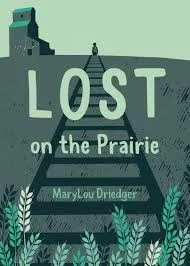
Lost on the Prairie by MaryLou Driedger
A fast-paced adventure set in 1907 about a 12-year-old boy who becomes separated from his family on a train ride from Kansas to Saskatchewan. Expect real danger and the emotional weight of a child separated from his family.
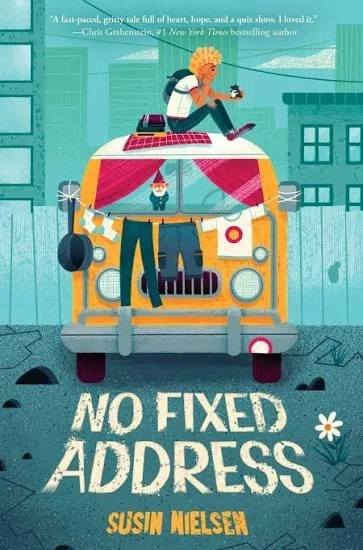
No Fixed Address by Susin Nielsen
Twelve-year-old Felix is funny, quirky, and living in a van with his mother, a secret he’s determined to keep from his new classmates. Narrated in his own distinctive voice, it mixes humour with real worry about family, money, and belonging.
Coop the Great by Larry Verstraete
Full disclosure. I wrote this book, but I’ve been told by teachers that it checks all the read-aloud boxes. It’s narrated by Coop, a cynical rescue dachshund who draws courage during a dangerous journey from stories of great dogs his new owner has read to him. Themes of family, friendship, loss, and grief spark lively discussions.
So, don’t make the mistake I did. Before you read a book to your class, read a chapter aloud to an empty room. If it rolls off your tongue, bring it in. If it doesn’t, your students will understand. Mine did.
Note:
If you haven’t yet, consider joining my mailing list. You’ll get an email each time a new issue of Behind the Books is released on this website. You can expect reflections on writing fiction and nonfiction for young readers, background stories behind my books, and recommendations for books worth passing on. I also share the kinds of classroom and reading connections that don’t fit easily into social media posts.
This is not a marketing blast. I won’t flood your inbox. Expect an email once or twice a month. I’ll only send it when I have something that is worth your time to read.