Why I Write for Young People
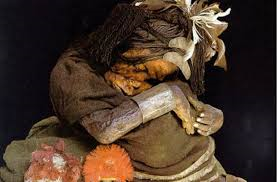
The Peruvian mummy
March 1, 2026
Have you ever wondered why I write for young readers? The seed was planted when I was in grade six. While thumbing through a National Geographics book at our local library, I discovered a story about the discovery of a boy mummy in Peru who had died in an untimely and unfortunate manner hundreds of years ago.
I sat on the floor to read the story. When I looked up at the clock, an hour had passed. I had been so lost in the story, so fascinated by the discovery and the questions of unfairness that it raised, that, for a while, time was suspended and I was in another world.
Like many middle graders, I was curious, on the threshold of thinking like an adult and ready to explore complex subjects. It was time to ask questions and to consider what stand I might take on issues like justice, courage, loyalty, truth, loss, fairness, and hypocrisy.
The Age that Stays With You
Middle graders inhabit a remarkable space between childhood and adulthood where curiosity is boundless and questions carry real weight. They are not satisfied with easy explanations or tidy conclusions. They want to understand how things work, why people behave as they do, and what choices truly mean. They are eager for ideas, for honesty, for stories that respect their intelligence and their growing sense of the world.
I find that age electrifying to write for. Not because young readers are easier to impress — they're not, they have excellent nonsense detectors — but because they are still genuinely open. A book can still arrive in their life and rearrange something. Adults read differently. We bring more to a book, but we also bring more armor. A middle grade reader can still be ambushed by a story.
I want to write the books that ambush them.
The Themes That Choose You
I didn't sit down one day and decide to write about courage, discovery, survival, and moral choices. Those themes chose me, the way certain themes always choose certain writers. They're the questions I've never finished answering for myself.
What does it actually take to be brave — not in the movie sense, but on an ordinary Tuesday when something hard is required of you? What do you do when the right choice and the easy choice are not the same thing? What do you discover about yourself when circumstances strip away everything comfortable?
These aren't children's questions. They're human questions. I write them for young people because young people are still early enough in the process to let the questions in without immediately defending against them. They'll sit with a hard question longer. They'll follow it somewhere uncomfortable if you've earned their trust on the page.
That's the gift of this readership. And it comes with a responsibility I take seriously.
What I Think Young Readers Deserve
They deserve to be taken seriously. Not preached at, not protected from complexity, not handed stories where goodness is rewarded and badness is punished in ways that bear no resemblance to actual life.
They deserve characters who make mistakes that matter. Endings that are honest. Moral situations where the right answer costs something.
They deserve, in short, the same quality of attention that we give to adult literary fiction — applied to their world, their age, their particular and irreplaceable moment of becoming.
I write for young people because I believe that work is serious and significant. Because I believe the books a child reads between eight and thirteen quietly shape the questions they'll spend the rest of their life asking.
And because, honestly, I still have a lot of those questions myself.
Next month: What Makes a Story Worth Telling?
If you would like to receive an email notifying you when a new issue of Behind the Books has been posted on my website, please add your contact information to the mailing list below. Should you have thoughts, questions, or a topic you’d like me to address, write to me at larry.verstraete@gmail.com - I read everything.
Thank you,
Larry